
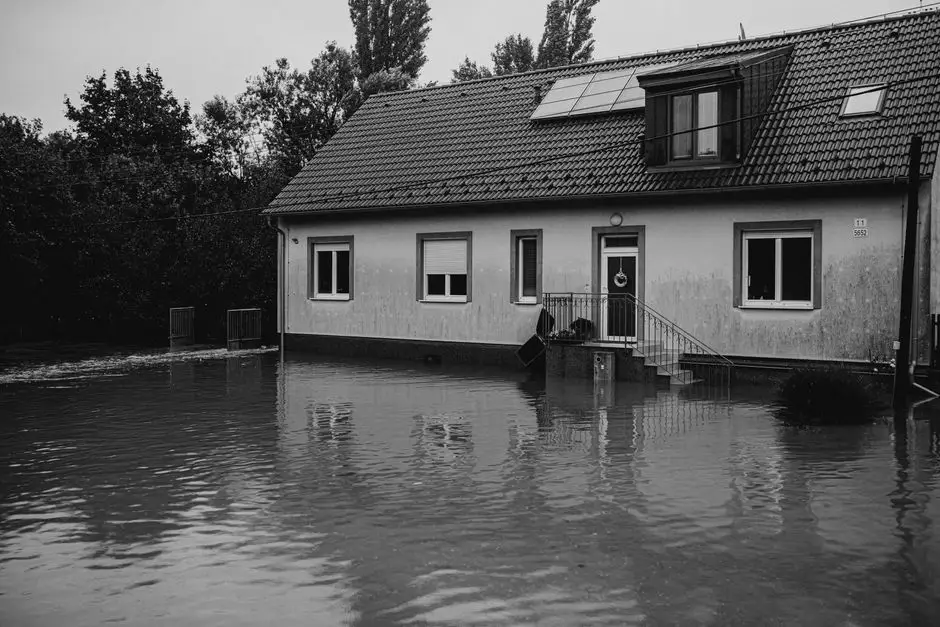
To dry out a flooded basement safely, you must first cut the power and gas, then remove standing water with a pump or wet vac, and finally run dehumidifiers and air movers until all materials read dry on a moisture meter. The entire process usually takes 2 to 5 days in Maryland, depending on how deep the water got and what it soaked into. This guide walks you through each step, the safety hazards most homeowners miss, and the point where a professional crew saves you money instead of costing you more.
How to Dry Out a Flooded Basement Safely: The Short Answer
How to dry out a flooded basement safely is a sequence of controlled steps that remove water, then moisture, then airborne humidity - in that order. Skip a step and you risk electrocution, mold growth within 24 to 48 hours, or a musty smell that never leaves.
Here is the condensed version for a basement with less than an inch of clean water:
- Shut off electricity at the breaker and gas at the meter.
- Put on rubber boots, gloves, and eye protection.
- Pump or wet-vac the standing water.
- Remove wet carpet, padding, and cardboard.
- Run dehumidifiers and fans for 48 to 72 hours.
- Check for moisture with a meter before you rebuild anything.
If the water is higher than a foot, contains sewage, or entered through a foundation crack, stop and call a pro. We handle Basement Water Removal in Maryland with truck-mounted extraction and industrial drying equipment that pulls moisture out of concrete and framing in a fraction of the time a box fan can.
Safety First: Before You Touch Anything
Safety in a flooded basement in Maryland starts with three shutoffs: electricity, gas, and water. Water and live current kill people every year in exactly this scenario.
If you can reach the breaker panel without stepping in water, kill the main. If the panel is already submerged or you have to wade to it, call an electrician or your utility first - do not gamble. Same with gas: if you smell rotten eggs, leave the house and call 911 from outside.
Other hazards we see on Maryland jobs:
- Sewage contamination. If the water came up through a floor drain or toilet, it is Category 3 black water. One splash in your mouth or eyes is a hospital visit. We treat every Sewage Backup Cleanup in Maryland job with full PPE and antimicrobial treatment.
- Structural collapse. Saturated soil outside pushes on foundation walls. If you see bowing or horizontal cracks, get out.
- Hidden electrical. Outlets, junction boxes, and furnace motors stay live even when the floor looks dry.
Once the power is off and the space is safe to enter, you can start removing water.
Step-by-Step: How to Dry a Wet Basement
How to dry a wet basement comes down to three phases: water removal, structural drying, and air quality control. Each phase has a target moisture level.
Phase 1: Remove Standing Water (Hours 0-12)
Use a submersible pump for anything deeper than 2 inches. A wet/dry shop vac handles the rest. Work from the lowest point toward the drain. If you have a sump pit, make sure the pump is running and the discharge line is clear - a frozen or clogged line in a Maryland winter just recycles water back into the basement.
For anything beyond a few inches, professional Water Extraction in Maryland uses truck-mounted units that pull 20 to 30 gallons per minute. That is the difference between a 4-hour job and a 2-day job.
Phase 2: Dry the Structure (Hours 12-72)
Concrete, drywall, and wood do not dry just because the air feels dry. You need airflow and dehumidification.
- Air movers: one per 10-15 linear feet of wall, angled at the baseboard.
- Dehumidifiers: a standard 70-pint unit handles about 1,300 cubic feet. A 1,000 sq ft basement needs at least two, running 24/7.
- Target humidity: keep the space between 30% and 50% relative humidity.
- Target moisture content: under 16% for wood, under 4% for concrete.
Open interior doors. Close exterior windows and doors - you are trying to dry the basement, not the neighborhood.
Phase 3: Remove Wet Materials (Hours 24-48)
Carpet padding is a sponge. It never dries fast enough to avoid mold. Pull it, bag it, and haul it out. Same with cardboard boxes, paper, and any upholstered furniture that sat in the water for more than a day. Drywall that wicked water more than 12 inches up the wall usually needs to be cut out and replaced.
How Long Does It Take to Dry a Flooded Basement in Maryland?
How long it takes to dry a flooded basement in Maryland is 2 to 5 days for most homes, with 3 days being the average for a clean-water flood caught early. Sewage backups and storm surges take 5 to 7 days because every surface needs antimicrobial treatment between drying cycles.
Three factors push you toward the long end:
- Water category. Clean (Category 1) dries fastest. Gray water from a washing machine or dishwasher adds a day. Black water from sewage or outdoor flooding adds two or more.
- Material. Concrete and tile dry slower than wood subfloor. Finished basements with insulation inside the walls take the longest.
- Season. A November flood in Maryland is easier to dry than a July one because outdoor humidity is lower. But cold basements slow evaporation - we run heaters alongside dehumidifiers when temps drop below 60°F.
If you are still reading wet readings on a moisture meter after 5 days, something is wrong. Either the source is still leaking or your equipment is undersized.
DIY vs Professional Basement Drying in Maryland
DIY vs professional basement drying in Maryland comes down to three questions: how deep is the water, what is in it, and what is on the floor. If the answer is "an inch, clean, and bare concrete," you can handle it with a shop vac and two dehumidifiers. If any answer changes, call us.
Here is the honest math for a 500 sq ft finished basement with 2 inches of water:
- DIY: $300-$600 in equipment rental (two dehumidifiers, four air movers, a pump), 3-5 days of your time, and a real risk of missing moisture behind baseboards.
- Professional: $1,200-$3,500 for extraction, drying, moisture mapping, and documentation. Most homeowner insurance policies in Maryland cover this if the flood was sudden and accidental.
Typical 2026 pricing in this area runs $2.50 to $6.00 per square foot for full basement drying and dehumidification. The cost climbs if drywall or carpet has to be removed and replaced.
We use thermal imaging and penetrating moisture meters to find water you cannot see. That is how we avoid the callbacks that happen when a homeowner dries the surface and leaves the wall cavity wet.
How to Prevent Mold After Basement Flooding in Maryland
How to prevent mold after basement flooding in Maryland is a race against the clock: mold can start growing on wet drywall and wood within 24 to 48 hours. The single most important thing you can do is get the space below 60% relative humidity within the first day.
Maryland's climate makes this harder than it sounds. Summer humidity averages 65% to 75%, and a flooded basement is already a swamp. Here is what works:
- Run dehumidifiers continuously until a moisture meter reads dry - not until the floor looks dry.
- Remove all porous materials that were wet for more than 24 hours. That includes carpet, padding, cardboard, and paper-backed insulation.
- Apply an antimicrobial to framing and concrete after extraction. We use EPA-registered products on every Mold Remediation in Maryland job, even when we catch the flood early.
- Fix the water source. Drying without fixing is just delaying the next flood.
If you smell that musty, earthy odor two weeks after the flood, mold is already colonizing. Call us before it spreads to the HVAC system.
Common Mistakes That Make Basement Flooding Worse
The mistakes that turn a 3-day drying job into a 3-week mold remediation job are almost always the same ones. We see them on repeat across Water Damage in Baltimore and the surrounding counties.
- Running a fan without a dehumidifier. You are just moving humid air around. It condenses on cool surfaces and feeds mold.
- Turning the heat way up. Warm air holds more moisture. Without dehumidification, you make the problem worse.
- Only drying the floor. Water wicks up drywall and into wall cavities. If you do not check with a meter, you miss it.
- Putting off the call. Every day you wait adds a day to the drying timeline and a zero to the mold bill.
- Assuming insurance will cover it later. Most policies require you to mitigate damage immediately. Waiting can void the claim.
When to Call a Professional
Call a professional when the water is deeper than 2 inches, when it contains sewage or outdoor runoff, when it has been sitting for more than 24 hours, or when your basement is finished. Those four conditions cover about 80% of the flooded basements we see in Maryland.
Water Damage Pros Maryland handles the entire process: emergency extraction, structural drying, moisture mapping, and documentation for your insurance claim. We serve homeowners across the state, from Water Damage in Columbia to the Baltimore metro and Southern Maryland. If you are not sure whether you need help, call us and we will tell you straight - no pressure, no upsell.
Frequently Asked Questions
How do you dry out a flooded basement safely?
Shut off power and gas first, then remove standing water with a pump or wet vac. Run dehumidifiers and air movers until a moisture meter reads dry - usually 2 to 5 days. Remove all wet carpet, padding, and drywall that wicked water above 12 inches.
How long does it take to dry a flooded basement in Maryland?
Most Maryland basements dry in 2 to 5 days with professional equipment. Clean-water floods caught within 24 hours average 3 days. Sewage backups or storm flooding take 5 to 7 days because every surface needs antimicrobial treatment between drying cycles.
Can I dry out my basement myself in Maryland?
You can DIY a shallow clean-water flood - under 2 inches on bare concrete - with rented dehumidifiers and air movers. If the water is deeper, contains sewage, or soaked into finished walls or carpet, professional drying is faster and prevents mold that DIY usually misses.
How much does professional basement drying cost in Maryland?
Typical 2026 pricing in Maryland runs $1,200 to $3,500 for a standard basement, or $2.50 to $6.00 per square foot. Cost depends on water depth, contamination level, and how much material has to be removed. Most sudden-discharge floods are covered by homeowner insurance.
Who do I call to dry out a flooded basement in Maryland?
Call Water Damage Pros Maryland at (855) 713-4896. We handle emergency water extraction, structural drying, and mold prevention across the state. We work directly with your insurance adjuster and document every step of the drying process.
Get Help with Water Damage in Maryland
A flooded basement gets worse every hour you wait. Mold starts in 24 to 48 hours, and structural damage compounds fast.
Call Water Damage Pros Maryland at (855) 713-4896. We will extract the water, dry the structure, and document everything your insurance company needs - usually the same day you call.