
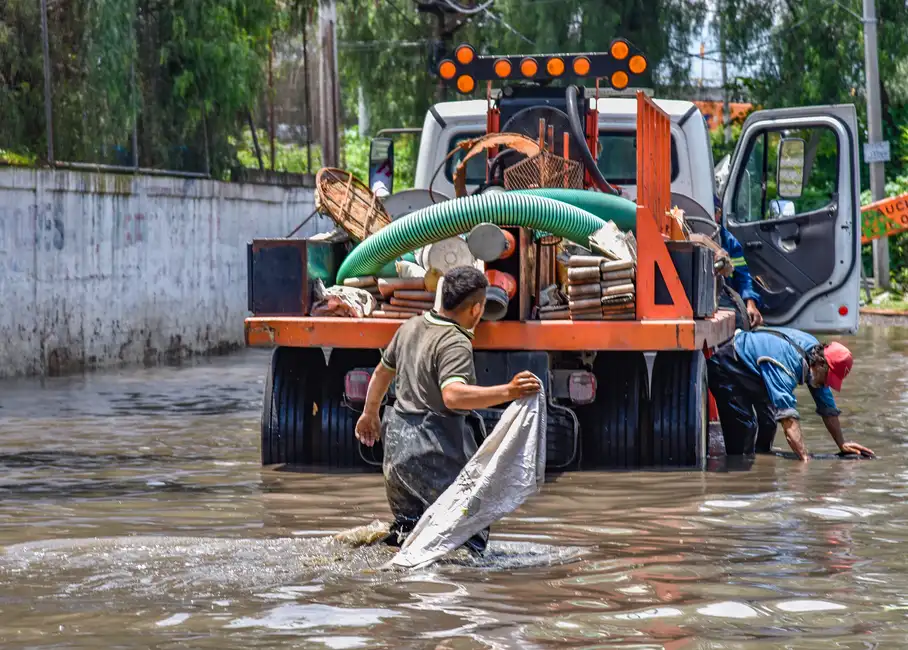
Emergency dispatch and assessment
A certified technician arrives on site, identifies the water source and category, and maps the moisture with a thermal imaging camera and moisture meter. You get a written scope of work before extraction begins.
Every water extraction job includes the core services below. If your situation requires additional work like mold remediation, structural repair, or content cleaning, we'll walk you through it and get your approval before we do anything extra.
A certified technician arrives on site, identifies the water source and category, and maps the moisture with a thermal imaging camera and moisture meter. You get a written scope of work before extraction begins.
We use submersible pumps, wet/dry vacuums, and extraction wands to remove standing water from floors, carpet, and hard surfaces. Most residential jobs pull 200 to 800 gallons during this phase.
After extraction, we apply an EPA-registered antimicrobial solution to all affected surfaces to prevent mold and bacterial growth. This is standard on every job, not an add-on.
We position commercial dehumidifiers and air movers to dry the structure to IICRC S500 standards. Equipment stays in place until moisture readings confirm the structure is dry.
We return each day to check moisture levels with a hygrometer, adjust equipment, and log readings. All documentation goes to your insurance carrier for the claim.
When moisture readings match the dry standard, we remove all equipment, do a final walkthrough with you, and provide a completion report for your records and your insurance company.
Water Extraction in Maryland is the mechanical removal of standing and trapped water from a structure using pumps, wet/dry vacuums, and extraction wands before structural drying begins. It is not a shop vac and a box fan. We map the moisture with a thermal imaging camera and a hygrometer, pull the bulk water with a submersible pump, then chase the water hiding behind baseboards, under hardwood, and inside wall cavities. Every job follows the ANSI/IICRC S500 standard for water damage restoration.
Maryland homes deal with a specific set of water problems: frozen pipe bursts in January, basement flooding after a summer storm, sump pump failure during a power outage, and sewage backup in older Baltimore-area rowhouses. If you're searching for emergency water extraction in Maryland near me at 3 a.m., we answer the phone. Our crews carry the tools to start pulling water within the first hour on site, which is the difference between a dry-out and a rebuild.
Here's exactly what happens from the moment you call until the last air mover gets picked up. No surprises, no mystery line items.
Schedule
Call or book online — a real human picks up and confirms a 2-hour arrival window.
Diagnose
Licensed tech inspects on-site, then walks you through the cause and your options.
Fix
The job is completed to code and done right the first time — no shortcuts, no surprises.
Guarantee
Every job backed by a written workmanship warranty — and we stand behind it.
Submersible pump
Pulls large volumes of standing water from basements, crawl spaces, and flooded rooms. Our pumps move hundreds of gallons per hour, which is the fastest way to get bulk water out.
Commercial dehumidifier
Removes moisture from the air inside your home after extraction. We use Dri-Eaz and Phoenix Restoration Equipment units sized to the square footage of the affected area.
Thermal imaging camera
Finds hidden moisture behind walls, under floors, and in ceilings without cutting into the structure. This is how we catch water that a visual inspection would miss.
Moisture meter and hygrometer
Measures moisture content in building materials and relative humidity in the air. We use these daily to track drying progress and confirm when the structure is dry.
Air mover
Circulates air across wet surfaces to speed evaporation. We position them based on the room layout and the materials that are wet, following IICRC S500 guidelines.
Negative air machine
Creates negative pressure in a contained area to prevent contaminated air from spreading to clean rooms. Used on sewage backups and mold jobs.
Wet/dry vacuum
Picks up residual water after the submersible pump has removed the bulk. We use RIDGID and DeWalt units for carpet, upholstery, and hard-to-reach areas.
ANSI/IICRC S500 Standard
The industry standard for water damage restoration. It defines water categories, classes of loss, drying goals, and documentation requirements. Every job we run follows this standard, which is what your insurance adjuster expects to see.
Moisture mapping and daily monitoring
We create a moisture map of your home on day one, then check readings daily with a moisture meter and hygrometer. Equipment gets adjusted or relocated based on the readings, and we don't pull gear until the structure hits the dry standard.
Containment and negative air
For category 2 and 3 water losses, we set up polyethylene sheeting and a negative air machine to keep contaminants from spreading. This is standard practice on sewage backups and any job where mold is present.
Antimicrobial treatment
We apply an EPA-registered antimicrobial solution to all affected surfaces after extraction. This is not a substitute for drying, but it adds a layer of protection against mold and bacteria while the structure dries.
01
What we do: Call us immediately at (855) 713-4896. We dispatch a crew with pumps and extraction equipment. If the water is still flowing, we shut off the main and start extracting. We document everything for your insurance claim.
→ Water is extracted within hours, drying equipment is running the same night, and your insurance adjuster has a complete file by the next morning.
02
What we do: We extract the standing water, pull up the saturated carpet and pad, and set up commercial dehumidifiers and air movers. We check the walls for hidden moisture with a thermal imaging camera.
→ The basement is dry in three to five days, mold never gets a foothold, and your claim is documented from start to finish.
03
What we do: We tarp the roof if needed, extract the water from the ceiling and floor, and set up containment to keep the damage from spreading. We dry the ceiling joists and insulation.
→ The leak is stopped, the water is out, and the ceiling and insulation are dried without a full tear-out in most cases.
04
What we do: We extract the water, dry the joists and subfloor with air movers and a commercial dehumidifier, and treat the space with antimicrobial solution. We check the vapor barrier and repair it if needed.
→ The crawl space is dry, the musty smell is gone, and your floor joists are protected from rot and mold.
Maryland's climate and housing stock create specific water damage patterns. Winter freeze-thaw cycles crack pipes in older homes, especially in rowhouses and split-levels built before 1980. Summer storms overwhelm sump pumps and push water through foundation walls in low-lying areas near the Chesapeake Bay and its tributaries. The clay-heavy soil across much of the state doesn't drain well, so water pools against foundations instead of soaking away. We also deal with high water tables in parts of Anne Arundel and Prince George's counties, which means basement flooding can happen even without a storm. Our crews know these patterns, and we stock the equipment to handle them. If you're searching for Maryland water extraction for flooded basements, we've done hundreds of them, from Catonsville to Bowie to La Plata.
Baltimore rowhouse neighborhoods
Older rowhouses have original galvanized pipes that corrode and burst. We know how to extract water from narrow spaces and dry masonry walls without causing more damage.
Anne Arundel County waterfront
Homes near the Severn and Magothy rivers deal with storm surge and high water tables. We handle crawl space and basement flooding in these areas regularly.
Prince George's County suburbs
Split-levels and colonials from the 1960s and 70s have finished basements that flood from sump pump failure. We extract and dry these spaces without tearing out more than necessary.
Eastern Shore communities
Low-lying areas near Elkton and Port Deposit see river flooding and storm surge. We handle extraction and drying in these areas with equipment staged nearby.
Freeze-thaw cycles in winter
Pipes in exterior walls and unheated crawl spaces freeze and burst. We get a spike in emergency calls from December through March, and we staff accordingly.
Summer thunderstorms and flash flooding
Heavy rain overwhelms sump pumps and drainage systems. Basements flood fast, and we need to extract before water reaches the finished areas of the home.
High water tables in coastal areas
Water seeps through foundation walls and floors even without a storm. We install vapor barriers and recommend sump pump upgrades to manage the ongoing moisture.
Clay-heavy soil across central Maryland
Poor drainage means water pools against foundations instead of draining away. This drives foundation seepage and crawl space water intrusion.
These are the calls we get most often across Maryland. If you're dealing with any of these right now, don't wait. Water damage compounds fast.
Problem
A burst supply line can dump 4 to 8 gallons per minute into your home. In 30 minutes, that's enough water to soak through drywall, ruin flooring, and start mold growth in the wall cavity.
Our Fix
We shut off the water if it's not already stopped, extract the standing water with submersible pumps, and dry the affected structure. We also document the loss for your insurance claim and can coordinate with a licensed plumber for the repair.
Problem
When a sump pump fails during heavy rain, a finished basement can take on several inches of water in under an hour. Carpet, drywall, furniture, and electronics are all at risk.
Our Fix
We extract the water fast, pull up saturated carpet and pad, and set up drying equipment. We also check your sump pump and discharge line so you know whether it needs replacement before the next storm.
Problem
Sewage is category 3 water, which means it carries bacteria, viruses, and parasites. Anything it touches, including drywall, insulation, and carpet, has to be removed and disposed of properly.
Our Fix
Our crews wear full PPE, contain the affected area with polyethylene sheeting and a negative air machine, extract the water, remove contaminated materials, and disinfect the space with hospital-grade products.
Problem
Water in a crawl space raises the humidity in your entire home, warps floor joists, and creates the perfect environment for mold growth. Most homeowners don't notice until they smell it.
Our Fix
We extract the standing water, dry the joists and subfloor, and install or repair the vapor barrier. We also check for foundation seepage points and can recommend a sump pump or drainage solution.
Water damage gets worse by the hour. Here's what you get when you call Water Damage Pros Maryland instead of waiting until morning.
Response in under 60 minutes
We dispatch 24/7 water removal in Maryland crews from multiple staging points across the state, so a burst pipe in Glen Burnie and a flooded basement in Frederick both get a truck rolling fast. Most Maryland addresses see a technician on site within 60 to 90 minutes of the call.
Industrial-grade extraction equipment
Truck-mounted and portable submersible pumps move hundreds of gallons per hour. We pair them with Dri-Eaz and Phoenix Restoration Equipment air movers and commercial dehumidifiers, so we're not just pulling water, we're setting up the drying system that keeps mold from starting.
Direct insurance billing
We document every affected room with photos, moisture readings, and a moisture map, then bill your carrier directly using Xactimate. That means you're not fronting thousands of dollars while waiting on a reimbursement check. We've worked with every major Maryland carrier.
Licensed, insured, and code-correct
Our team holds IICRC WRT and ASD certifications, and we work under a Maryland Home Improvement Commission (MHIC) license. We follow Maryland Department of the Environment (MDE) regulations on water disposal and antimicrobial application, so the job passes inspection the first time.
Water extraction pricing depends on how much water there is, what category it is, and how far it has spread. Typical 2026 pricing in Maryland runs $500 to $2,500 for extraction alone, and $1,500 to $6,000 when you include structural drying and equipment. If your loss is covered by insurance, you usually pay only your deductible. We provide a written scope before we start, and we bill your carrier directly so you're not fronting the cost.
Typical Investment Range
$500 - $6,000 depending on scope
The cost of extraction and drying is almost always less than the cost of tearing out and rebuilding a flooded room. Getting the water out fast and drying the structure correctly prevents mold, rot, and structural damage that would cost far more to fix later.
What changes the price
Volume of water
A single flooded room is a different job than a full basement. The more water there is, the longer extraction takes and the more equipment we need. A 200-gallon job might take two hours; an 800-gallon job can take six.
Water category
Clean water from a supply line is category 1. Water from a washing machine or dishwasher is category 2. Sewage is category 3. Category 3 jobs require containment, PPE, and disposal of contaminated materials, which adds labor and cost.
Affected materials
Carpet and pad are quick to extract but often need to be removed. Hardwood takes longer to dry and may need mat drying. Concrete and tile are the easiest. The mix of materials in your home drives the labor time.
Drying time required
Most jobs dry in three to five days. If the structure is dense, like plaster walls or thick hardwood, it can take seven to ten days. Each day of drying means equipment rental and a monitoring visit.
Access and containment
A basement with a walkout door is easier to work in than a crawl space with a 2-foot access hatch. Tight spaces and multi-story jobs take longer and require more setup.
Insurance coverage
If your policy covers the loss, you pay your deductible and we bill the carrier directly. If it's not covered, we work with you on pricing and can phase the work to fit your budget.
Google ★★★★★4.9
Called at 11 p.m. after our water heater let go. The crew was here in under an hour, pulled the water, and set up drying equipment. They handled the insurance paperwork and kept us informed the whole time. Highly recommend.
Yelp ★★★★★4.8
We had a sewage backup in our basement and didn't know where to start. Water Damage Pros Maryland contained the area, removed the contaminated materials, and disinfected everything. The basement was dry and safe in four days. Professional from start to finish.
BBB ★★★★★4.9
After a pipe burst in our crawl space, we called three companies. Water Damage Pros Maryland was the only one that showed up the same day. They extracted the water, dried the joists, and installed a new vapor barrier. Fair pricing and no surprises.
Water Damage Pros Maryland has handled thousands of water loss jobs across the state, from century-old Baltimore rowhouses to new construction in Howard and Montgomery counties. Our technicians hold IICRC WRT (Water Restoration Technician), ASD (Applied Structural Drying), and AMRT (Applied Microbial Remediation Technician) certifications. We're EPA Lead-Safe Certified and OSHA 10 trained, which matters when we're working in pre-1978 homes. We know how Maryland's clay soils, high water tables, and freeze-thaw cycles drive water into basements and crawl spaces, and we know how to get it out without tearing your house apart.
We deliver Maryland water extraction services across the state, from the Baltimore metro to the Eastern Shore and Southern Maryland. Our crews are staged in multiple locations so we can reach your address fast, whether you're in a rowhouse in Brooklyn or a waterfront home in Tracys Landing. No matter where you are, you get the same equipment, the same certifications, and the same standard of work.
Brooklyn's older rowhouses and proximity to the Patapsco River mean basement flooding and burst pipes are common. We extract fast and dry masonry walls without over-demolition.
Glen Burnie's mix of older homes and newer construction sees sump pump failures and supply line bursts. We handle both with the right equipment for each building type.
Aspen Hill's split-levels and colonials have finished basements that flood from sump pump failure and foundation seepage. We extract, dry, and check your drainage.
Owings Mills has a lot of newer construction with PEX plumbing that can fail at fittings. We extract the water and dry the structure without unnecessary tear-out.
Middle River's waterfront location means storm surge and high water tables. We handle crawl space and basement flooding with pumps and drying equipment staged nearby.
Reisterstown's older housing stock and well water systems see frozen pipe bursts in winter. We respond 24/7 and extract before the water reaches finished areas.
Rosedale's rowhouses and bungalows have original plumbing that corrodes over time. We extract water from tight spaces and dry the structure to IICRC standards.
Elkton sits near the head of the Chesapeake Bay and sees river flooding and storm surge. We handle extraction and drying for homes in low-lying areas.
La Plata's clay soil and high water table drive crawl space flooding and foundation seepage. We extract, dry, and install vapor barriers to prevent recurrence.
Four Corners homes deal with basement flooding from summer storms and aging sump pumps. We extract fast and set up drying equipment the same day.
Tracys Landing's waterfront properties face storm surge and tidal flooding. We extract water from crawl spaces and basements and dry the structure completely.
Capitol Heights has older homes with finished basements that flood from sewer backups and sump pump failures. We handle category 3 water with full containment.
Cabin John's wooded lots and proximity to the Potomac mean foundation seepage and crawl space water intrusion. We extract and dry with minimal disruption.
Garrett Park's older homes have plaster walls and original plumbing that can fail. We extract water and dry plaster and hardwood without unnecessary demolition.
Port Deposit sits along the Susquehanna River and sees flooding after heavy rain. We extract water from basements and crawl spaces and dry the structure fast.
Real answers to the questions we hear most often from local homeowners and property managers.
Extraction is the first phase of water damage restoration. Once the water is out, we handle the drying, repairs, and rebuild so your home is put back the way it was, from drywall and paint to flooring and trim.
View Water Damage RestorationWhen water is actively flowing, every minute counts. Our emergency water removal crews are on call 24/7 and carry the pumps and extraction equipment to stop the damage from spreading to unaffected rooms.
View Emergency Water RemovalFloodwater is contaminated and requires more than a wet/dry vacuum. We handle flood cleanup with antimicrobial treatment, containment, and disposal that meets Maryland Department of the Environment regulations.
View Flood CleanupMaryland basements flood from sump pump failure, foundation seepage, and storm surge. We pull the water, dry the concrete and framing, and check your sump pump and vapor barrier before we leave.
View Basement Water RemovalCrawl spaces trap moisture and feed mold growth into the living space above. We extract standing water, dry the joists and insulation, and install vapor barrier where it's missing.
View Crawl Space Water RemovalSewage is category 3 water and requires full PPE, containment, and disinfection. We extract, remove contaminated materials, and treat the space with hospital-grade disinfectant to make it safe again.
View Sewage Backup CleanupCall (855) 713-4896 any time, day or night. A live dispatcher answers, takes your address, and sends the nearest crew. For non-emergency questions, email info@waterdamageprosmaryland.com and we will get back to you the same business day. If water is actively rising, call first.
Phone
(855) 713-4896Address
Maryland
Hours
Mon–Fri: 7AM – 7PM
Sat: 8AM – 4PM
Sun: Emergency Only
24/7 Emergency Available