
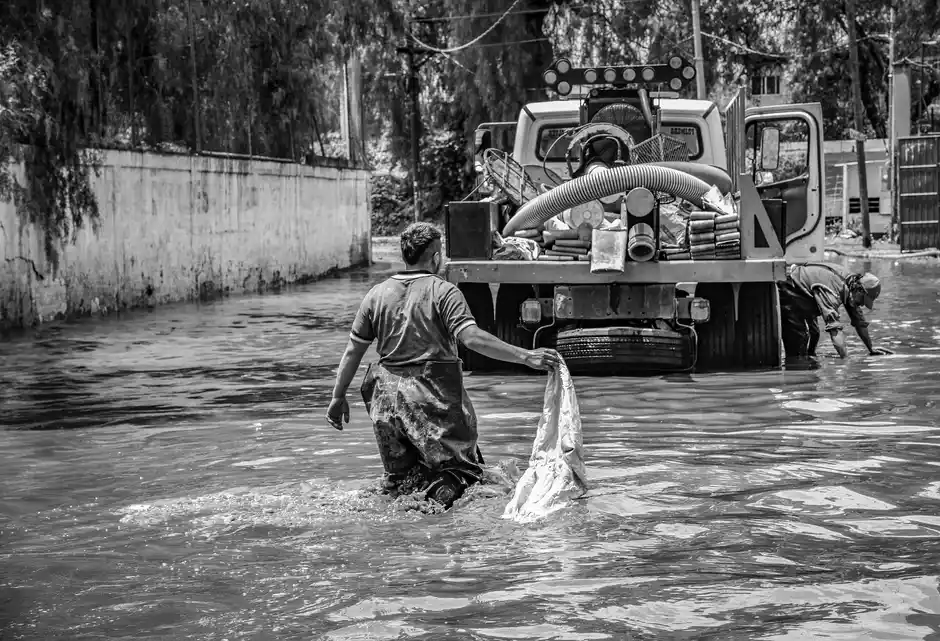
Emergency water extraction
Submersible pumps for deep water, wet/dry vacuums and weighted extraction for carpet and pad. We pull standing water fast because every hour it sits, more material gets ruined.
Every flood cleanup job includes the core scope below. If your situation calls for something extra, like sewage containment or mold remediation, we tell you upfront before we start, not after.
Submersible pumps for deep water, wet/dry vacuums and weighted extraction for carpet and pad. We pull standing water fast because every hour it sits, more material gets ruined.
Thermal imaging camera and moisture meter readings on every wall, floor and ceiling assembly in the affected area. You get a documented map showing exactly where the water went.
EPA-registered antimicrobial solution applied to affected framing, subfloor and block walls. This buys you time against mold growth while the structure dries out over the next several days.
Dri-Eaz and Phoenix Restoration Equipment dehumidifiers and air movers, sized to the cubic footage of the affected space. Desiccant units for crawl spaces and tight assemblies that standard equipment can't dry.
We come back every day to log moisture readings and adjust equipment placement. You get the full drying log and photo set at the end, formatted for your insurance adjuster.
Saturated drywall, insulation, carpet and pad get cut out, bagged and hauled away following MDE regulations. You're not left with a pile of wet construction debris in your yard.
Flood Cleanup in Maryland is the process of removing standing water, extracting what's trapped in carpet, drywall and concrete, and drying the structure back to its pre-loss moisture level. It is not a shop vac and a box fan. We pull water with submersible pumps and wet/dry vacuums, meter every wall cavity with a moisture meter and thermal imaging camera, then run commercial dehumidifiers and air movers until the readings match a dry standard. Every job follows ANSI/IICRC S500, the industry standard for water damage work.
Maryland floods for a lot of reasons, and most of them are not hurricanes. Frozen pipe bursts in January, sump pump failure in a wet spring, foundation seepage after three days of rain, sewage backup when the county main surcharges. Older rowhouse basements in Baltimore and Parkville take on water through cracked block walls. Newer construction in Gaithersburg and Mount Airy fights crawl space water intrusion instead. If you're searching for emergency flood cleanup in Maryland near me at midnight, that's exactly the call we built this service around.
Five steps, no mystery. Here's exactly what happens from the moment you call until the last air mover gets pulled out of your house.
Schedule
Call or book online — a real human picks up and confirms a 2-hour arrival window.
Diagnose
Licensed tech inspects on-site, then walks you through the cause and your options.
Fix
The job is completed to code and done right the first time — no shortcuts, no surprises.
Guarantee
Every job backed by a written workmanship warranty — and we stand behind it.
Thermal imaging camera
Finds hidden moisture behind drywall, under flooring and inside wall cavities without tearing everything open.
Moisture meter and hygrometer
Reads moisture content in building materials and relative humidity in the air so we know exactly when the structure is dry.
Submersible pump
Removes deep standing water from basements and crawl spaces fast, before extraction equipment can even reach the floor.
Dri-Eaz and Phoenix dehumidifiers
Commercial LGR and desiccant units that pull moisture out of the air and building materials around the clock.
Air movers and air scrubbers
Air movers speed evaporation off wet surfaces; air scrubbers with HEPA filtration capture airborne mold spores and dust.
Negative air machine
Creates negative pressure in a contained work zone so dust and spores don't migrate into clean areas of the home.
Inspection camera
Lets us look inside wall cavities and under subfloors to confirm the structure is dry before we pull equipment.
ANSI/IICRC S500 standard
The industry standard for water damage restoration. It defines how to classify water, categorize the loss, and set drying goals based on material type and saturation level. Every job we run follows it.
Moisture mapping and dry-down logging
We map affected areas with meter readings on day one, then log readings daily until the structure hits dry standard. That log is your proof the job was done right and your adjuster's proof the claim is legitimate.
Containment for contaminated water
Category 2 and Category 3 losses get polyethylene sheeting barriers and negative air pressure before any removal work starts. This keeps contaminants from spreading to unaffected rooms.
Xactimate documentation
We build line-item scopes in Xactimate, the estimating software most insurance carriers use. It means your adjuster sees pricing and scope in a format they already trust, which speeds up the claim.
01
What we do: Call us immediately. We roll 24/7 with submersible pumps and extraction equipment. The sooner water is out, the less material gets ruined and the smaller your repair bill.
→ Standing water gone within hours, drying equipment running the same day, and a documented scope for your insurance claim.
02
What we do: Shut off the main water valve, then call us. We use thermal imaging to find the full extent of the moisture, cut out what can't be saved, and dry the framing.
→ Hidden moisture found before it becomes mold, structure dried in 3 to 5 days, and a repair scope your contractor can work from.
03
What we do: We extract the standing water, remove any saturated insulation, set desiccant dehumidifiers, and check the vapor barrier and sump pit while we're under there.
→ Crawl space dried to standard, vapor barrier repaired or replaced, and no musty smell working its way up into the living space.
04
What we do: We treat it as a Category 3 loss: contain the area, remove contaminated materials, disinfect with EPA-registered products, and dry the structure.
→ Contamination removed safely, structure disinfected and dried, and documentation showing the full scope for your adjuster.
Maryland's climate does us no favors. Winter brings frozen pipe bursts in older homes with uninsulated exterior walls. Spring and summer deliver heavy rain that overwhelms sump pumps and pushes groundwater through foundation walls. Fall nor'easters and remnants of tropical systems dump inches in hours. The building stock makes it worse: Baltimore rowhouses with stone and block foundations, mid-century homes in Parkville and Dundalk with original cast iron drains, and newer construction in Gaithersburg and Mount Airy where crawl space vapor barriers fail early. We work under MHIC licensing and follow MDE regulations on debris disposal, and our crews are EPA Lead-Safe Certified because disturbing painted surfaces in pre-1978 housing can release lead dust. If you need affordable flood damage cleanup in Maryland, the cost depends heavily on what kind of building you're in and how fast water gets extracted.
Baltimore rowhouse neighborhoods
Stone and block foundations seep after heavy rain, and shared walls mean water can travel between units before you notice it.
Gaithersburg and Montgomery Village
Newer construction with crawl spaces that trap moisture; vapor barrier failures are common after wet springs.
Parkville and Towson
Mid-century homes with original cast iron drain lines that back up and send sewage into basements.
Riva and Edgewater waterfront
Properties near the water deal with storm surge and high water tables; sump pumps run constantly during wet seasons.
Frozen pipe season from December through February
Burst pipes inside wall cavities cause hidden water damage that often isn't discovered until it shows on the floor or ceiling below.
Heavy spring and summer rain overwhelming sump pumps
Basements flood fast, and the first 24 hours determine whether you're drying carpet or replacing it.
High water tables near the Chesapeake and tidal rivers
Crawl spaces and basements stay damp longer, which means drying takes an extra day or two and mold risk is higher.
Older housing stock with lead paint and asbestos
Removal work requires EPA Lead-Safe practices and careful handling, which we build into every pre-1978 job.
Most flood calls fall into a handful of categories. Here's what we see most often and how we handle each one.
Problem
Basement takes on inches of water overnight, soaking carpet, drywall and stored belongings before anyone notices.
Our Fix
We pump the standing water out, extract what's in the carpet and pad, cut out unsalvageable drywall, and dry the block walls with commercial dehumidifiers. We also check your sump pit and discharge line before we leave so you know what failed.
Problem
Water sprays inside a wall cavity for hours before it shows on the floor, saturating insulation and framing where you can't see it.
Our Fix
Thermal imaging camera finds the wet zones behind the drywall. We cut strategic access holes, extract, and dry the cavity with air movers and a dehumidifier. Documentation goes straight to your adjuster.
Problem
Category 3 water carries bacteria and pathogens. Anything it touches is contaminated and most porous materials have to go.
Our Fix
Full containment with polyethylene sheeting and a negative air machine. We remove contaminated materials, disinfect with EPA-registered products, then dry the structure. This is a bigger scope than a clean-water loss and we price it that way upfront.
Problem
Slow water intrusion wicks up block walls and into carpet tack strips, creating hidden mold growth that shows up weeks later.
Our Fix
We extract, pull baseboards to check the wall bottom plate, and run drying equipment until the block reads dry. If we find mold, we contain and remediate before the rebuild.
Flooding gets worse by the hour. Mold can start colonizing wet drywall in 24 to 48 hours, and every day you wait adds a zero to the repair bill. Here's what you get when you call us instead of waiting it out.
Water out in hours
Our crews are on call 24/7 and carry truck-mounted extraction equipment. Most residential flood cleanup jobs have standing water gone within 2 to 6 hours of arrival, which is the difference between replacing a carpet pad and replacing the whole floor.
Drying backed by readings
We don't guess. Daily moisture meter and hygrometer readings tell you and your adjuster exactly where the structure stands. You get a documented dry-down log, which is the same record your insurance company wants to see before it closes a claim.
Mold stopped early
Anything porous that stays wet past 48 hours is a mold problem waiting to happen. We apply antimicrobial solution to affected framing and use air scrubbers with HEPA filtration to knock down airborne spores while the structure dries.
Insurance-ready paperwork
We document with photos, moisture maps and line-item scopes built in Xactimate, the estimating platform most carriers use. That means fewer back-and-forth emails and a faster settlement on your flood damage cleanup Maryland claim.
Typical 2026 pricing for flood cleanup in Maryland runs $1,200 to $4,500 for a single affected area, with whole-basement jobs, sewage backups and crawl space work landing higher. Small Category 1 losses under 200 square feet can come in under $1,000. We give you a written scope with pricing before work starts, and we bill insurance directly when your carrier covers the loss.
Typical Investment Range
$1,200 - $4,500 for most residential jobs; higher for sewage, crawl spaces or whole-basement losses
The cost of doing it right is almost always less than the cost of doing it twice. A properly dried structure means no mold remediation, no replacing flooring you already replaced, and no health problems down the road.
What changes the price
Water category
Category 1 (clean water from a supply line) is the least expensive. Category 2 (gray water from appliances or tubs) adds treatment. Category 3 (sewage or groundwater) requires containment, disinfection and disposal, which is the biggest cost driver.
Square footage affected
Price scales with the area. A 200-square-foot bathroom loss is a different job than an 1,800-square-foot finished basement. Equipment count and drying time both go up with size.
Material types
Carpet and pad come out fast. Hardwood, plaster, tile and dense subfloor materials take longer to dry and may need specialty drying setups, which adds time and equipment.
Mold already present
If mold has colonized before we arrive, the job shifts from flood cleanup to mold remediation. That means containment, HEPA filtration, removal of affected materials and a separate scope.
Access and equipment staging
Basements with narrow stairs, crawl spaces with tight entries, and homes with limited parking all slow the job down. We plan for it in the scope so there are no surprises.
Insurance coverage
If your policy covers the loss, we document in Xactimate and bill your carrier directly. You're responsible for your deductible. If it's not covered, we give you a cash price upfront.
Google ★★★★★4.9
Called at 11 p.m. after our water heater let go. They were at the house in 45 minutes, had the water out and equipment running by 2 a.m. The drying log they gave us made the insurance claim easy. No mold, no issues.
Google ★★★★★4.8
Crawl space flooded after a week of rain. Two other companies wanted to just run fans. These guys crawled under there, pumped it out, and set a desiccant unit. Three days later the readings were dry. Honest pricing too.
Yelp ★★★★★4.9
Sewage backup in the basement. They contained everything, removed what had to go, and disinfected the whole area. Professional from start to finish and they worked directly with our adjuster. Would call again without hesitation.
BBB ★★★★★4.8
Frozen pipe burst in January. They found water behind the wall with a thermal camera that we didn't even know was there. Cut it out, dried it, documented everything. No mold three months later. Solid work.
Our technicians hold IICRC WRT (Water Restoration Technician) and IICRC ASD (Applied Structural Drying) certifications, with AMRT training for the mold side of the work. We're EPA Lead-Safe Certified, which matters in Maryland's older housing stock where disturbing painted surfaces can release lead dust. Every crew carries OSHA 10 training, and we work under a Maryland Home Improvement Commission (MHIC) license and follow Maryland Department of the Environment (MDE) regulations on debris handling and disposal.
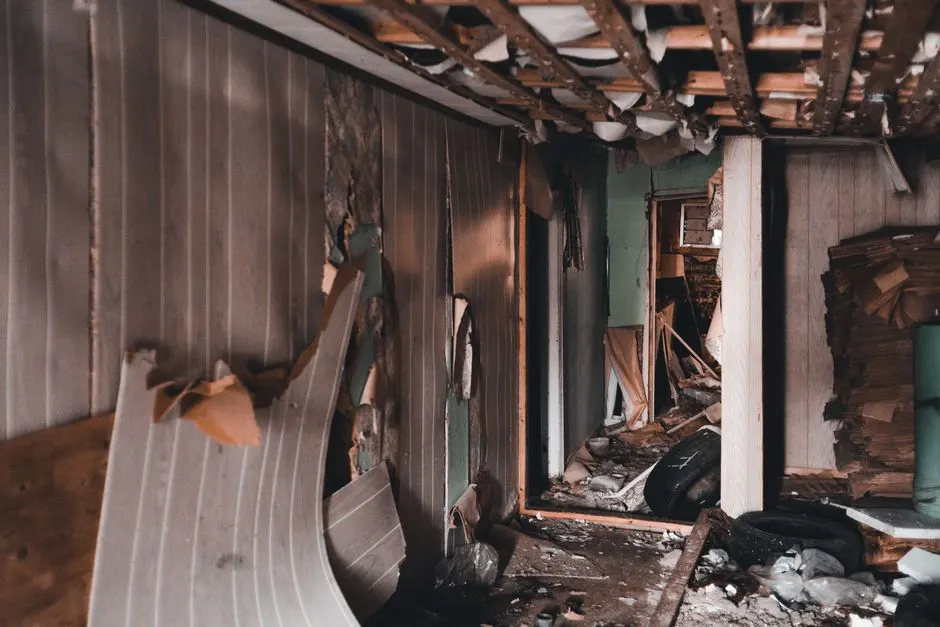
We run Maryland flood cleanup services statewide, with crews staged to reach most addresses within 60 to 90 minutes. From the Baltimore beltway to the DC suburbs to the Eastern Shore, we've dried homes, rentals and commercial buildings in every kind of Maryland neighborhood.
Older rowhouses and single-family homes with block foundations that seep after heavy rain. We extract, dry the block walls, and check sump pits before we leave.
Newer construction with crawl spaces and finished basements. Sump pump failures and vapor barrier issues are the calls we get most. We handle both.
Large homes with multiple finished levels and complex plumbing. When a supply line fails, water travels fast. We map the whole affected area before we start.
Rural and semi-rural properties where well systems and older septic lines can back up. We handle the extraction, disinfection and drying in one visit.
Mid-century homes with original cast iron drains that back up during heavy rain. We extract, contain, and disinfect when it's a sewage loss.
Mix of older housing and newer builds. Basement flooding from sump failures and foundation seepage is common. We dry to standard and document for insurance.
Dense residential neighborhoods where water can travel between adjacent properties. We find the full extent with thermal imaging before we scope the job.
Larger lots with crawl spaces and outbuildings. High water tables after wet seasons mean longer dry times. We plan for it in the scope.
Carroll County homes with crawl spaces and well systems. Frozen pipe bursts in winter and sump failures in spring are the two calls we get most.
Rural Carroll County properties where water intrusion often goes unnoticed until it reaches the living space. We find it with moisture meters and thermal cameras.
Waterfront properties near the South River where storm surge and high water tables keep sump pumps running. We extract fast and dry thoroughly.
Montgomery County neighborhood with a mix of housing ages. Finished basements and older plumbing mean water damage can hide behind walls. We check.
Cecil County properties near the upper Chesapeake where groundwater intrusion is common. We pump, extract, and dry crawl spaces and basements.
Southern Maryland rural properties where well and septic systems are standard. Backup and seepage calls get full containment and disinfection.
Anne Arundel County waterfront area where storm surge and tidal flooding push water into crawl spaces and lower levels. We dry to standard, not to guesswork.
Real answers to the questions we hear most often from local homeowners and property managers.
Once the water is out, restoration puts your home back together. We handle drywall, flooring, trim and paint so you're not juggling three different contractors after a flood.
View Water Damage RestorationThe first step of any flood job. Truck-mounted and portable extraction units pull water out of carpet, pad and hard surfaces fast, before it wicks into walls and subfloor.
View Water ExtractionFor when water is actively coming in. We roll 24/7 with submersible pumps and stop the source before we start extracting, so you're not bailing a sinking boat.
View Emergency Water RemovalMaryland basements flood from sump failures, foundation seepage and backed-up drains. We pump them out, dry the block walls, and check your sump pump before we leave.
View Basement Water RemovalCrawl spaces trap moisture and grow mold fast. We extract standing water, run desiccant dehumidifiers, and check vapor barrier condition while we're under there.
View Crawl Space Water RemovalCategory 3 water is a biohazard. We contain the area with polyethylene sheeting, remove contaminated materials, and disinfect with EPA-registered products before drying.
View Sewage Backup CleanupCall (855) 713-4896 any time, day or night. A live dispatcher answers, takes your address, and sends the nearest crew. For non-emergency questions, email info@waterdamageprosmaryland.com and we will get back to you the same business day. If water is actively rising, call first.
Phone
(855) 713-4896Address
Maryland
Hours
Mon–Fri: 7AM – 7PM
Sat: 8AM – 4PM
Sun: Emergency Only
24/7 Emergency Available